


Looking back on the history of the Pentecostal Messenger with editors Charlotte Beal, John Mallinak, Randy Lawrence Jr., and Spencer Ming.
Messenger Publishing
August 20, 2026
Topic:
Pentecostal History
John Mallinak, Editor, 2000-2007
Charlotte Beal, Editor, 2007-2011
Randy Lawrence Jr., Editor, 2011-2014
Spencer Ming, Editor, 2019-Present
John: I came on board at Messenger Publishing House in May 1998 and began working with Dr. Aaron Wilson, Peggy Allen, Brian Ramos, and Tom Wilson. Prior to this, I had pastored a church and worked for a printing company and for an advertising agency, manually building layout boards for print ads.
Charlotte: I started working at Messenger College toward the beginning of 1997. After a couple of years I moved over to Messenger Publishing House (MPH) and worked on curriculum and editing for The Messenger.
Randy: In 2007, when I first started working at the General Office for the Pentecostal Church of God (PCG), I was a part of The Messenger Team, which at that time worked on putting together 11 issues a year.
Spencer: In 2018, I was moved to Texas to serve as the Communications Director for the PCG. Immediately, the Pentecostal Messenger (PM) became one of the primary projects I was asked to lead and oversee.
John: I had the honor of working as an Editorial Assistant, a Coordinating Editor and then as editor of the Pentecostal Messenger from the Fall of 2000 until 2007. After serving as editor, I continued to work in the editorial pool for the magazine and for Christian Education literature until 2012.
Charlotte: Through the years I had many roles and responsibilities, including editing, design, and article gathering and writing.
Randy: From 2007 to 2010, I served on a team to help plan and review each issue of the PM, and then from 2011 to 2014, I served as Director of Communications and essentially as editor of the magazine, being responsible for all things PM related.
Spencer: Initially, I led a planning team as Editor and Creative Director. At that time, we had a layout designer and production manager. Since around 2021, I have taken on just about every role in the process: writer, editor, layout designer, production, etc.
John: I look back on the friendships and wisdom I gained from my co-workers and supervisors, recognizing that those were eternally valuable times that still have a positive effect on me today. Their input into my life changed me forever, and the times I spent with them are a treasure.
Charlotte: I have many great memories, but it was always the people — the people I worked with at MPH and at the PCG headquarters, the people who wrote articles or were featured in the articles.
Randy: Back when we had 11 issues a year, we had more staff dedicated to the process, and some of my favorite all time PCG HQ memories come from working with that team of precious people. Later when I was overseeing the entire process, I was proud when we won the award from the Evangelical Press Association for Most Improved Publication. A lot of hard work went into that redesign, so it was fun to get that award.
Spencer: My tenure with the PM has seen a lot of transition as the PCG has moved from a 1st-century to a 2nd-Century, from a denomination to a missional movement, and from an American church with a global mission to a global church with a global mission. So, for me, it has been such a joy to be part of sharing some amazing moments of vision-casting, eternal impact, and life transformation.
John: One of the first issues I worked on carried the account of a pastor in the Philippines whose brother was killed by Muslim extremists. He forgave them. In some ways it was disturbing, but it was a powerful story.
Charlotte: We did an entire issue focused on Out-of-the-Box Outreach, where we highlighted unconventional ministries like “Hookers for Jesus.” (This issue almost got me fired.) But I still believe in the message of that issue. For some, it really pushed boundaries; but for others, it inspired. That issue was pivotal to me and to others, but it sure did cause a stink.
Randy: On one particular occasion, we did an entire issue dedicated to special needs ministry — this was a particular passion of mine and will always be near and dear to my heart.
Spencer: One of my first projects was the Centennial special edition in 2019, where we endeavored to layout 100 pages for 100 years. Later (Feb. 2024), I was excited to highlight Elisa Johnson as the first elected female district bishop in PCG history. We were able to meet with her in person and hold a live photoshoot that featured her heritage and ministry context—not only as a woman but as a representative of PCG Native American Ministries.
John: I think it has been important as a communication tool for the denomination and as a public relations piece that explains who we are and where we are going.
Charlotte: It really is the voice of the organization, relaying information and inspiring the constituency across the globe.
Randy: I still remember as a kid picking up issues of the PM in my local church and reading various stories. Even when I was young and not interested in reading, I can still remember cover photos. It made me feel like I was a part of a much larger story. I believe this is a major role of the PM: to connect our churches with the global story of what God was doing in the earth through the PCG.
Spencer: The Pentecostal Messenger has proven the test of time by remaining a chief communication source to PCG churches and ministers. It carries a legacy and heritage unlike any other resource we have made available, since its pages archive spiritual breakthrough, missional achievement, and valuable institutional knowledge.
John: I loved the interview articles I was able to put together about well-known missionaries and leaders from the past such as Hazel Kleintop and Ray J. Smith. Their faith and service inspired me.
Spencer: The most significant moments for me have involved hearing from our global church. Following Global Conference or missions trips or other missions endeavors, I get to hear about how God is moving around the world. It is in these moments that I feel most connected to the real PCG.
Charlotte: The deep friendships I had developed with the people I worked with and met through the years. So many of them had a huge impact on me then and still do to this day.
Randy: I'm grateful that I got to be a small part of something with such a tremendous heritage in our movement.
Charlotte: I would hope that it pushes boundaries, inspires people to join the Great Commission, and shares news of what is happening in the organization globally.
Spencer: I hope the PM will continue to be a source of celebration and storytelling—not simply an itinerary for upcoming ministry travel, but a place where God's faithfulness is recorded for future generations.
John: The years when Charlotte Beal and Randy K. Lawrence, Jr. were creating the layouts.
Randy: As much as I'm partial to the redesign I led with the “PM” mark on the front, I tend now to lean more toward the older, iconic issues of the 70s and 80s as some of my favorites.
John: Small layouts take as long or longer than large ones. And don't forget to read the headings! They can have mistakes that are easily missed (from Dr. Wilson).
Charlotte: How much time and thought goes into an issue, and how far ahead you have to think and plan.
Randy: How much work it is! It requires a lot of long hours.
Spencer: Gathering content can be difficult at times. Since the headquarters is not a church with a weekly service, we often rely only on the images and stories that are passed along to us.
John: Encouraging. Informative. Accessible.
Charlotte: “Voice of the PCG”
Randy: Iconic. Inspirational. Influence.
Spencer: “Legacy worth building on.”
Want to ask a question, tell a story, or share what you've learned? Let us know!
Connect with our Team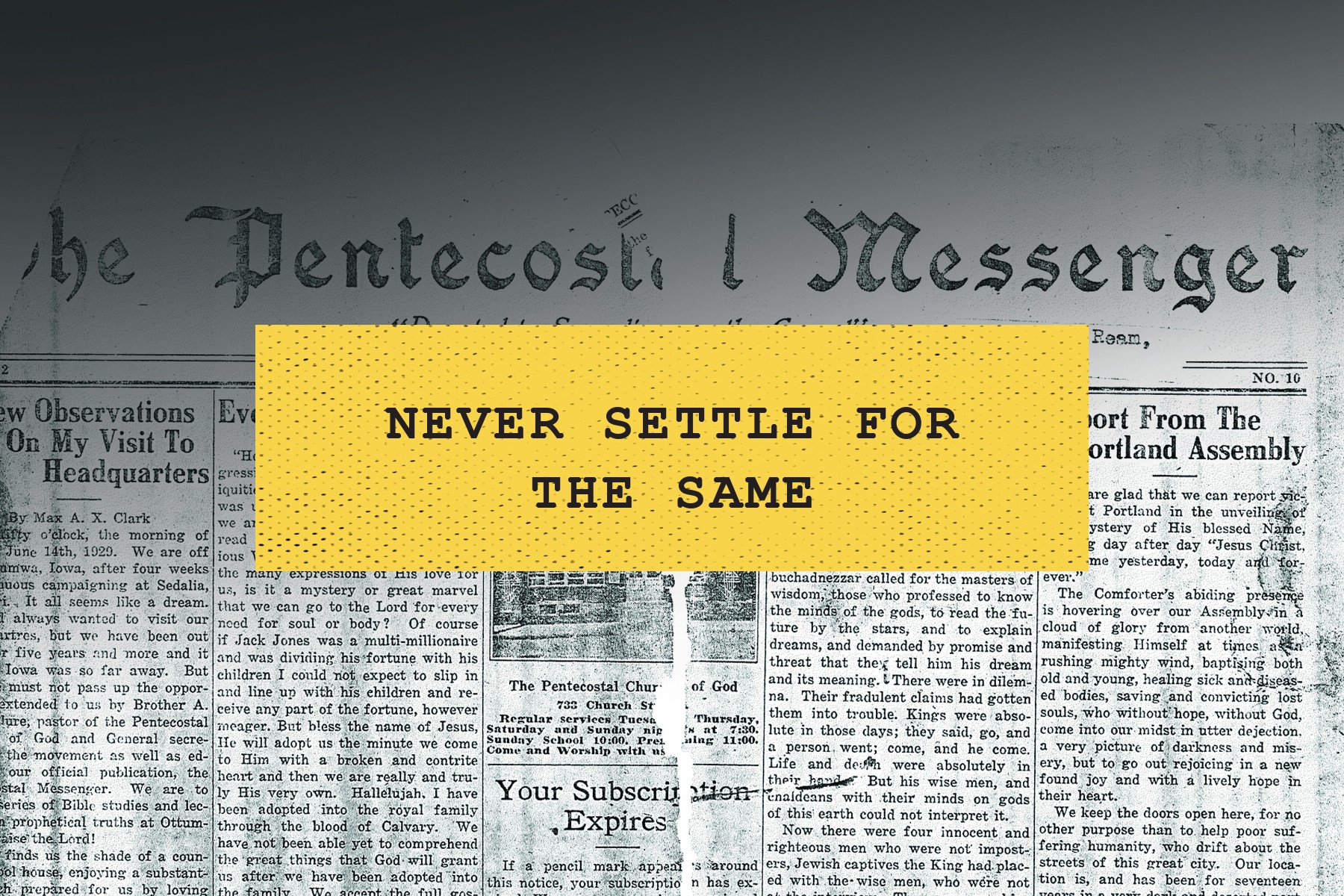
After 100 volumes of the Pentecostal Messenger, we pause to review significant changes in form and style through each decade of the magazine's existence.
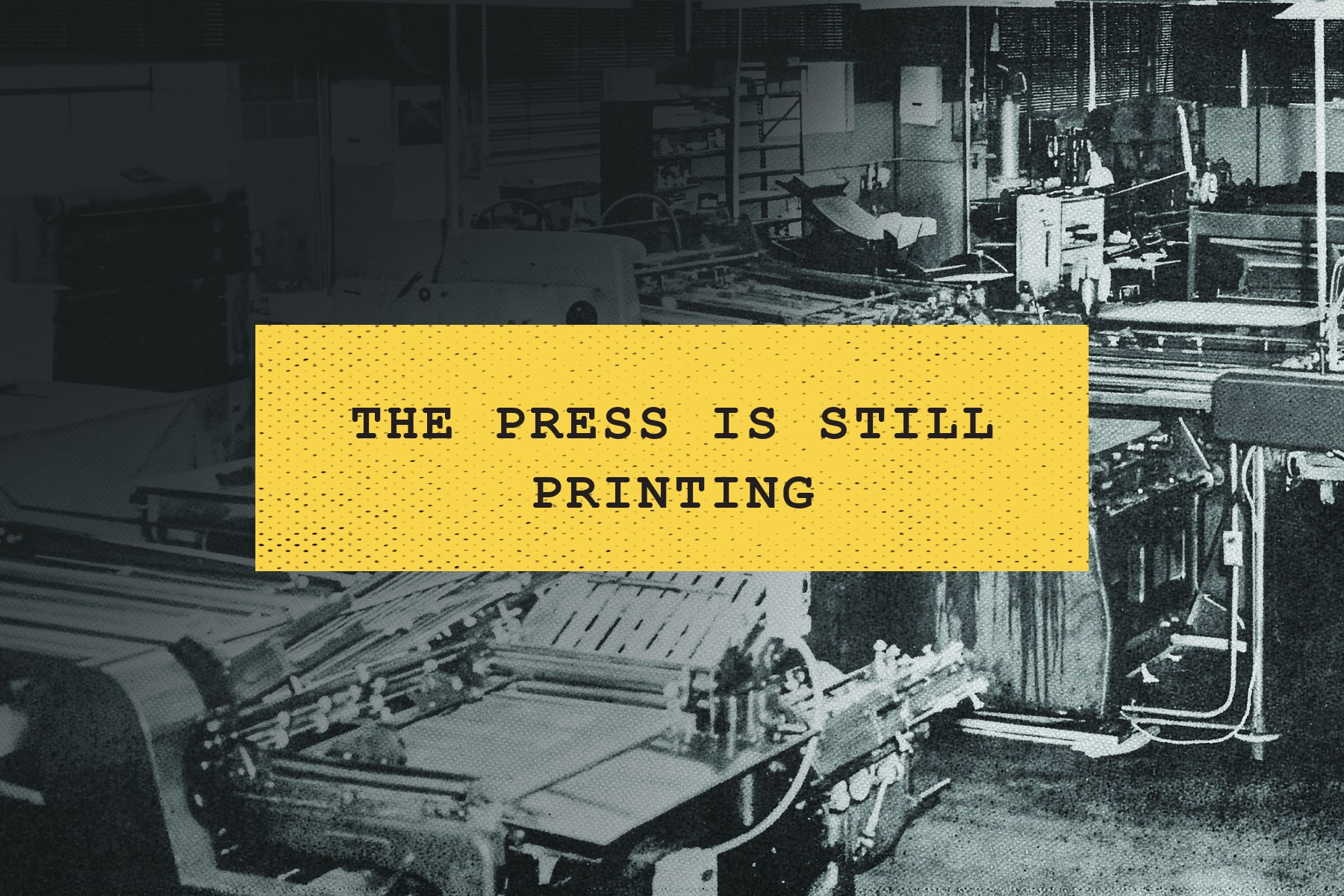
In celebration of the Pentecostal Messenger's 100th volume, we review the early foundations and legacy of this important publication.
General Bishop Virgil Kincaid pictures the PCG as one symphony movement with many parts under one Conductor, all moving together toward a crescendo.

© 2025 Pentecostal Church of God. All rights reserved.


